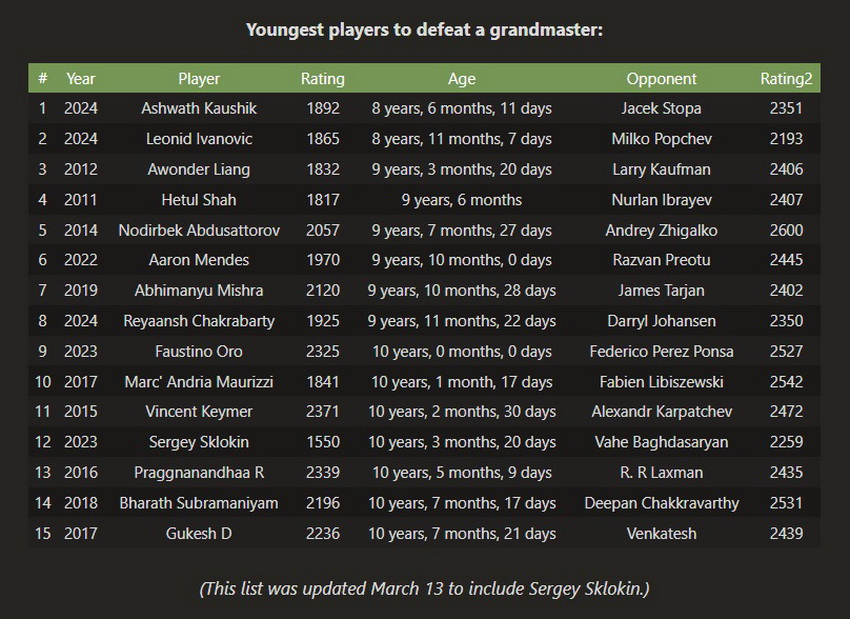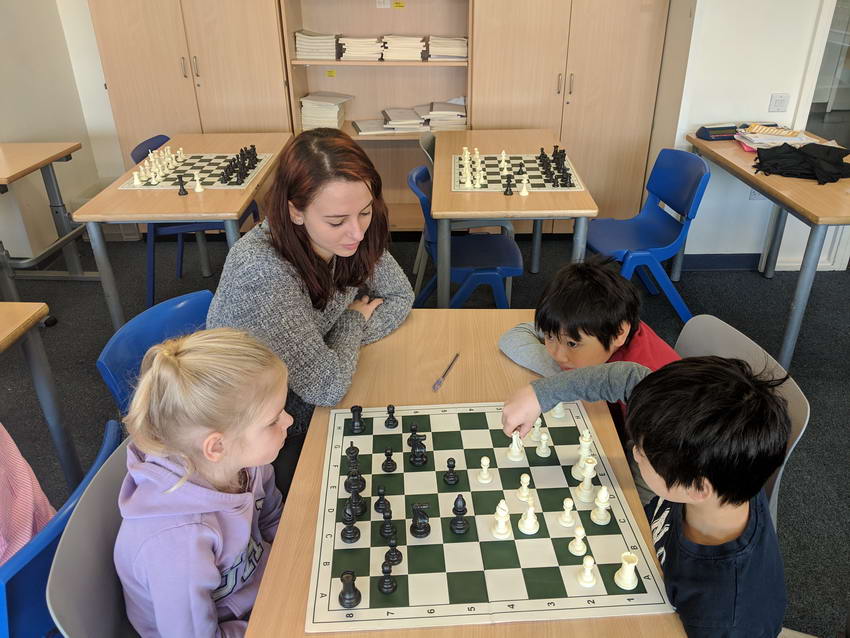
The game of chess is witnessing a fascinating trend. New research by Chess.com shows that grandmasters are now achieving their titles at an earlier age than ever. Will the chess world see 10- or 11-year-olds becoming grandmasters in the next few years?

In the past year, we’ve seen a surge in children scoring extraordinary results. Records that would’ve seemed unbreakable only five to 10 years ago aren’t as shatterproof as we once thought, and it’s just a matter of time until they are broken again. “Child’s play” as some say.

Here are some examples:

The results appear to be a part of a new trend as shown by Chess.com research that looks at the age of players who secure the grandmaster title.

While the average age for players achieving the most prestigious title in chess was 30 between 1975-1979, it dropped to 22.8 between 2020 and 2024. The highest age for a new GM was 32.8 in 1977. More then four decades later, in 2021, the average age is down to a record low of 20.9.

10 players are currently pending approval for the GM title in 2024. The average age is down to 21.4, the second lowest to date.

Article source chess.com

Breaking Barriers: Growing The Game

The Chess Rising Stars Girls’ Online Chess Club is now into its second term. Supported by lead coach WFM Maria Manelidou, our active community of girls taking part in chess lessons continues to grow.

In its 2019 publication ‘Development of Women’s Chess – Progress Plan’, the English Chess Federation identified that “there will need to be cultural change at all levels of chess in England which will require engagement from clubs, counties, unions, schools and individual members”.

In support of this aim our club is free to enter for girls who already have chess lessons with us.

“Chess has played an important role in my life and I am keen to share that. I moved to Greece when I was a young girl but I didn’t speak any Greek. Joining the local chess club changed my life because chess has its own language. It helped me to make friends and become more confident.”

WFM Maria Manelidou – Founder at Chess Rising Stars London Academy

We are keen to promote and create opportunities for girls to play chess with us. Our Girls’ Chess Club Online is another step in this direction.

Jul 18, 2025

Bend It Like Philidor

I envy football fans who still look forward to a new season. As a Norwich City fan, the off-season is infinitely preferable.

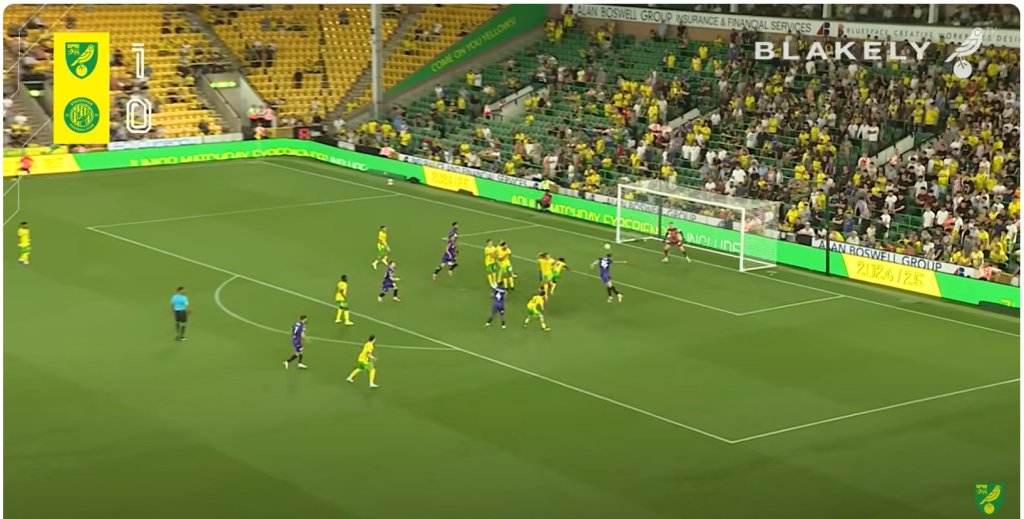
Take last August, we opened with a 2–0 loss to newly promoted Oxford. Then there was a moment during the first round of the EFL Cup that stays with me:

Two minutes after taking the lead, a Stevenage freekick floated gently over our defenders, reached an unmarked player on the edge of our 6-yard box and nestled into the bottom corner from the header for 1-1.

The camera cut to Johannes Hoff Thorup, our newly hired (now fired) manager, shaking his head with glazed eyes.

I suspect he was thinking about Philidor.

Goode left completely unmarked

Set Pieces

Which brings us to endgame training. When done well, it’s the chess equivalent of having practised thousands of hypothetical freekicks. You can become grim, repetitive and reliable, unlike Norwich’s defenders, fully prepared for both common and uncommon scenarios. 

Queen vs Rook is a perfect example, full of neat bits of geometry and calculation exercises that will improve your general chess understanding. Let’s first see what might go wrong.

What Not To Do

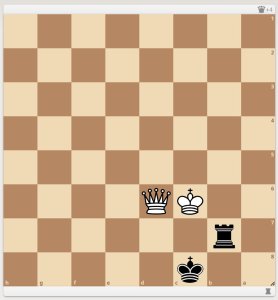
When the black King is on the edge of the board, there are two main defensive tries to be aware of:

Black to play

1. … Rb6+!
1/2 – 1/2

White is unable to capture the Rook because of stalemate but neither can we move away because of the skewer.

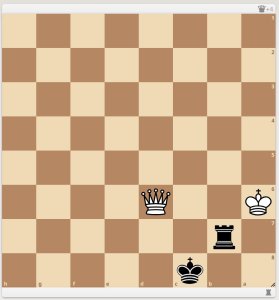
Black to play

1. … Ra7+!

Again, the Rook is immune because of stalemate. This time White will either get caught in a perpetual on the a- b- and c-files or, if we try running away, there’s a pin on the d-file:

2. Kb6 Rb7+
3. Kc5 Rc7+

(3. Kc6 transposes to the stalemate defence)

4. Kd5 Rd7!
1/2 – 1/2

Good Chess Culture

Here’s where François-André Danican Philidor can step up and show us how it’s done:

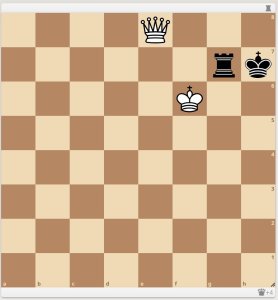
Black to play

This instructive zugzwang was supposedly found by the man himself. Black is forced to separate the King and Rook because keeping them connected immediately loses:

1. … Rg8
2. Qh5#
1-0

1. … Kh6
2. Qf8! picks up the Rook
1-0

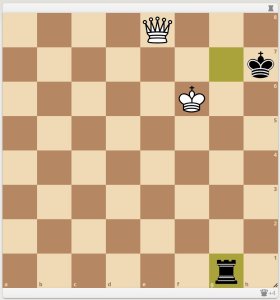
Once Black separates the Rook, we have a nice pattern of checks leading to a fork or mate:

White to play

1. Qe4+ Kh8

(1. … Kf8 2. Qh4#)

2. Qa8+ Kh7

(2.  … Rg7 3. Qh1# is pretty)

3. Qa7+!
1-0

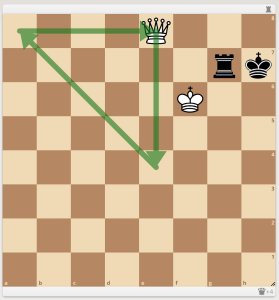
White to play

With White to move, we need to Bend it Like Philidor™

1. Qe4+ Kg8
2. Qa8+ Kh7
3. Qe8

Et voilà, the triangulation brings us back to the zugzwang.

Of course, there are plenty of other winning methods to explore in just this one endgame but hopefully you have acquired a taste of what it takes to effectively manage a football team handle this endgame. 

One must imagine Philidor happy.

Chris Russell

Additional content:
Interactive ‘Bend it Like Philidor’ lichess study
(22/07/25)

Mapping your Chess Progress: A Guide to Chess Rising Stars Courses

How to Use Chess Rising Stars Courses to Improve Your Chess


Our comprehensive chess courses serve as the roadmap to chess mastery. Whether you’re a junior or adult improver, our expert coaches are here to guide you with the knowledge and support you will need.

Juniors – In-person


Chess Rising Stars London Academy is creating the ideal environment to help introduce the game to younger children, the
Chelsea Chess Club for 5 to 7 year olds. Your child will discover the joys of learning chess in an interactive and enjoyable setting. We will work together on chess strategy and tactics plus associated skills such as sportsmanship, planning and focus.

Moving forward, our main junior chess club, the Chelsea Chess Club is staffed by 4 expert coaches. The Chess Rising Stars team will ensure that children are grouped with those of a similar age and chess level. We also offer support to more experienced children who are intending to compete in chess tournaments and team matches.

WGM Andreea Navrotescu, Guest coach at the Chelsea Chess Club

Juniors – Online


The
Wednesday Online Club is perfectly suited as an introduction to small-group chess lessons for less experienced children. We would recommend that children are already familiar with how the pieces move, check and checkmate but no further knowledge is required.

The Friday and Sunday Online Clubs offer groups at Beginner and Intermediate/Advanced level. There is a new group exclusively for secondary school chess players aged 11-16 at the Friday Online Club. Chess is gaining popularity in this age range, with students even using it for their Duke of Edinburgh’s Award activity.

In our invitational Elite Online Club, we work together on areas of strategy, tactics and mindset to build the confidence and skills necessary to compete beyond Chess Rising Stars. To support this development, there are regular guest coaching appearances from Grandmasters.

Registration is open for the CRS Christmas Online Tournament 2023

Adult Improvers


Our
Adult Improvers Online Group Classes would be ideal for adult beginners or parents whose children are learning the game. We will work together on the fundamentals of chess strategy and tactics. You will have the chance to try out what you have learned in our private, friendly tournaments.

We offer interactive and engaging private chess lessons online, delivered by our team of experienced coaches. The Chess Rising Stars teachers have been carefully selected and trained by WFM Maria Manelidou and are passionate about sharing their extensive chess knowledge and experience.

If you are keen to compete in OTB or online tournaments, our coaches have supported adult students in their local leagues, tournaments and even internationally. We have helped students to exceed their rating goals by following our individual training plans.

What Next?


If you are embarking on a journey to enhance your chess skills, look no further than Chess Rising Stars courses, meticulously designed to cater to players of all ages and levels.