

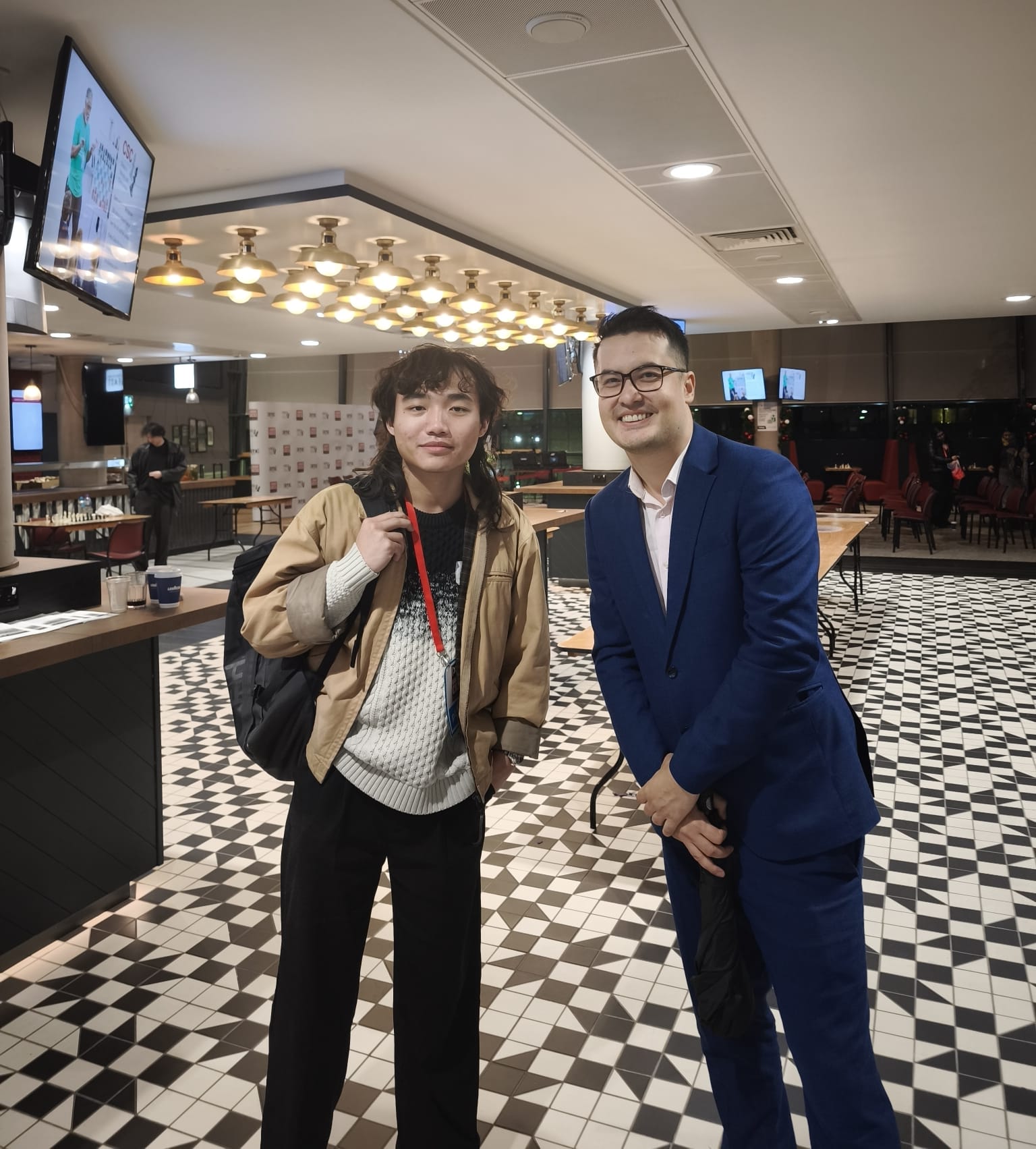
One of my favourite aphorisms to share with my adult students is borrowed — loosely paraphrased — from GM Ben Finegold: “When kids want to improve at chess, they play a lot of chess and get better; when adults want to improve, they spend most of their time sitting around talking about wanting to improve and asking how they can do so.” This rings uncomfortably true. Adults tend to believe in optimisation, in identifying the most time-efficient, economical route to progress and harvests. And who can blame them? As the faces at the top of the game grow younger year by year, there seems to be an unspoken urgency to compensate for lost time, to wonder where they would have been now had they begun playing as a child. I fell squarely into this trap myself, transfixed by lost opportunities, struggling to look ahead. Never did I entertain, as I binged the entire series of The Queen’s Gambit, the alien idea of myself seated in front of a chessboard among dozens of others — foot tapping against the linoleum floor in a restless rhythm, trembling hand clawing at a pawn with the flick of the wrist. And yet, nearly five years later, I found myself at the Emirates Stadium, competing in the London Chess Classic, in only my second-ever classical tournament.
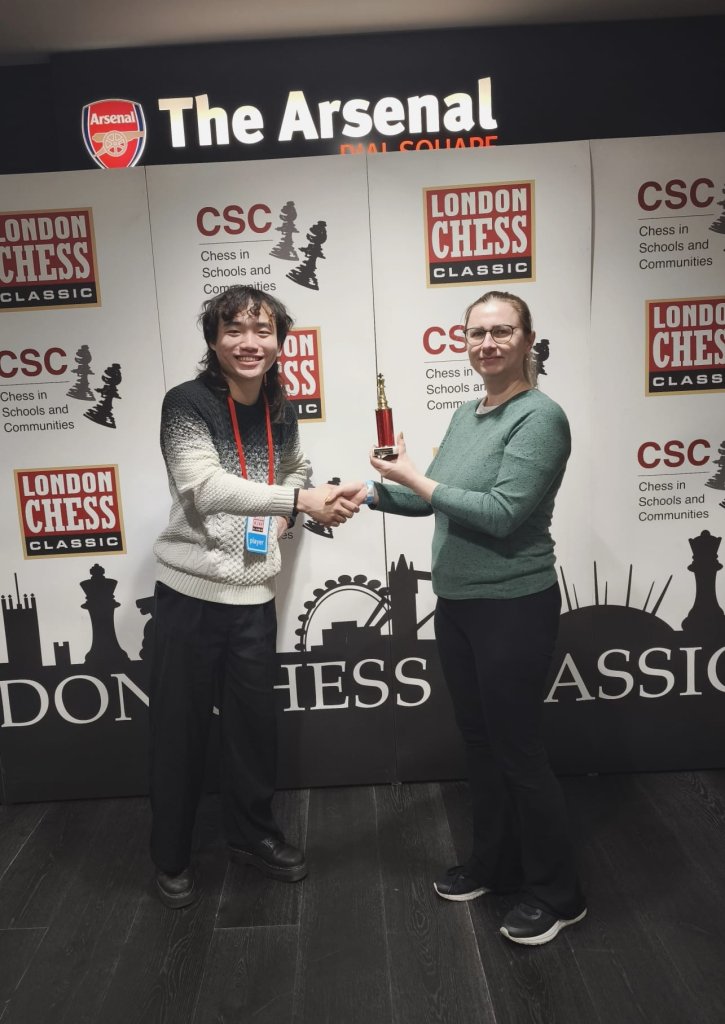
I was by no means a late starter. By chance, I discovered my passion for chess through the university chess club a year after marvelling at Beth Harmon’s brilliance. Thursday chess socials soon replaced weekends. I still recall countless evenings spent at the student union pub, debating the validity of obscure gambits and sacrifices with friends rated 1200 on Chess.com, karaoke music blaring in the background. I participated in a handful of ECF-rated fixtures for the university team against clubs across Hampshire and later took up teaching chess part-time while studying for my Master’s in London. Yet it wasn’t until this April, when I began coaching full-time, that I finally decided to take a leap forward — to stop calculating lost time and to compete regularly.
I started signing up for rapid and blitz tournaments every other week, studying chess four to six hours a day. My online ratings surged, climbing from 1500 to 2100 Rapid in just over half a year. I was breathing and living chess. And yet, my first classical tournament this summer did not go my way at all. Having not played classical chess in two years, I was ill-equipped to handle the long time control, unsure how to use the abundance of time to calculate long, convoluted lines. I squandered advantages against weaker players and lost game after game, feeling more frustrated than ever. Eventually, I stepped back to reassess and to rebuild. I played more games than ever and analysed them with greater discipline. By the end of November, I returned to classical chess at the London Chess Classic.
Tournament Report
Playing in the U-2100 Round Robin section, I must admit that I had a wobbly start on the first day. My opponent insisted on a Grünfeld approach with 3…d5, though I had played 3. Nf3 instead of 3. Nc3. Relying on some hazy recollection from my online blitz games, I improvised. I was pleased to find a pawn sacrifice in exchange for my opponent’s Grünfeld bishop in the opening, but a mental lapse soon followed. Despite spotting my opponent’s knight fork, I skipped the first step of my plan and forgot to retreat my rook. I fought on, nevertheless. I reminded myself that a good player doesn’t collapse in frustration over one mistake but instead searches for ways to recover. I trusted that the absence of Black’s dark-square bishop would at least weaken their kingside, which proved to be a correct intuition as my bishop dominated the diagonals and eventually trapped Black’s queen. It was my first FIDE-rated classical victory!
Round 2 marked a quiet shift in my mentality. On our way to the stadium, my colleague and friend — an experienced competitor himself — noticed my nerves. He patted me on the shoulder and offered a simple if not corny piece of advice: the purpose of classical chess is not to obsess over the results, but to play a beautiful game to the best of one’s ability. Forty good moves, he exclaimed, and you should walk away proud.
Then something funny happened during the game. As my opponent and I blitzed out the opening, I intended to play a Neo-Grünfeld against White’s Catalan Opening and reach a symmetrical position. Yet when I was ready to play c6–d5, I suffered from another mental lapse and pushed my d-pawn forward by one square. We had entered the King’s Indian Defence, an opening that I had never seriously attempted. It felt like a terrible joke. I was flabbergasted, eyes wide, heart pounding, stomach turning; my opponent sensed nothing and played on. Numerous thoughts raced through my head… until my colleague’s advice resurfaced. Forty good moves. I composed myself and searched through snippets of memories from playing against the King’s Indian as White, piecing together some chimera of an opening plan. I didn’t play perfectly of course, but I tried more resiliently than ever. Ultimately, I found myself in a slightly better bishop-knight endgame. My opponent offered a draw; I declined. He cracked, and I broke through. I remember signing the scoresheets with a grave expression, my mind still tangled in the endgame. It wasn’t until I was halfway down the stairs that the realisation hit me: I’d won. I broke into an uncontrollable smile.
Over the course of those five days, I noticed certain superstitions quietly attaching themselves to me. I wore the same necklace each day, listened to the same Beatles songs, and ate a Cadbury bar before each game. A week later, I joked with CRS coach Michael about shaving during tournaments being a taboo; he agreed, offering that altering one’s facial hair was a sure way to invite bad luck and shatter a winning streak. I realised then that many players share such ritualistic tendencies. Perhaps it is these irrational, near-absurd aspects that distinguish human players from computers’ cold precision — wandering disoriented through the miasma, but stubbornly braving through.
Round 3 was my proudest game of the tournament sealed with a glamorous finish. Against an extraordinarily resourceful 10-years-old, I played the Catalan and soon had the faint realisation that my opponent did not have a good understanding of the position when she played 4…Bb4+, followed by 5…Bxd2+ instead of 5…Be7, trading off Black’s crucial dark-square bishop. I played 10. a4 with a threat to dislodge her knight on b6, inducing 10…a5. A few moves later, I was staring at the position and contemplating means to exploit my space advantage. Then a memory surfaced: Game 8 of the World Championship match between Ding Liren and Ian Nepomniachtchi, where Ding made use of his advanced a-pawn and played an unconventionally early rook lift so as to transfer it to the kingside. I felt the devil on my shoulder and couldn’t resist. I played 18. Ra3 (which turned out to be engine-approved!) and intended Rf3 as a follow-up.
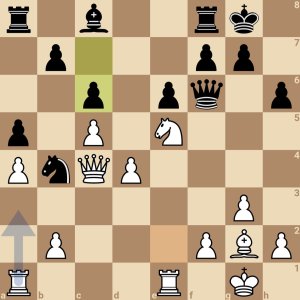
As my opponent sank into thought, I strolled around the playing venue and watched from the balcony world-class Grandmasters like Alireza Firouzja and Gawain Jones analysing their games from the Elite section. I felt graced by this ineffable flow of inspiration, as if by proximity and osmosis I had been granted some fleeting inklings of brilliance from those chess colossi. Back at the board, I optimised the placement of my pieces and secured a glorious outpost for my knight on d6. Recognising the a2–g8 diagonal’s significance over the e-file, I sacrificed a rook and unleashed a devastating attack.
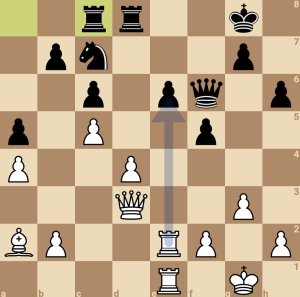
I had a lucky head start in Round 4, where I blitzed out a familiar line in the Sicilian Najdorf, confidently following a textbook Fischer game that I’d shown to some of my students. I had a comfortable middlegame, but decided to speed up to apply time pressure while my opponent began to live desperately on increments. It was risky as I did lose some of my advantages, but Black eventually blundered.
Before the final round, my next opponent proposed a draw since I was already leading the group by 1.5 points and would win the tournament regardless. In hindsight, accepting would have been wise, but I was driven by a theatrical instinct — perhaps inherited from my screenwriting background — to finish on a high note (plus, admittedly, I wanted the rating points). I walked into my opponent’s preparation and found myself in a dicey position. I managed to untangle and even win an exchange before growing careless and giving back the material. Fortunately, I retained an edge due to my king’s better activity and converted the rook-and-pawn endgame. It wasn’t perfect, but I finished with a clean 5/5.
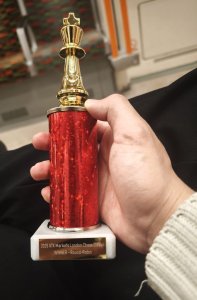
Looking back now, I feel equal parts pride and embarrassment. I cringe at missed wins and simple mistakes, yet I can’t deny how proud I am of the result. I also carry a special memory of briefly speaking with GM David Howell, who reminded me that consistency matters more than anything else in one’s improvement. I learnt plenty from this tournament, and as I look ahead to the coming year, I’m no longer feeling that dreaded urgency. I have no doubt that 2000 FIDE Classical is within reach.


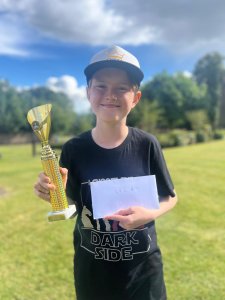 CRS student, Noah, with his U12 Boys trophy at the 2024 EJCOA Finals


